Filings
Two magnetic poles, drawn the way a textbook draws a field: one short line per sample point on an even grid, its angle the field's direction there, its length the field's strength. That rule, applied without exception, produces the image below.
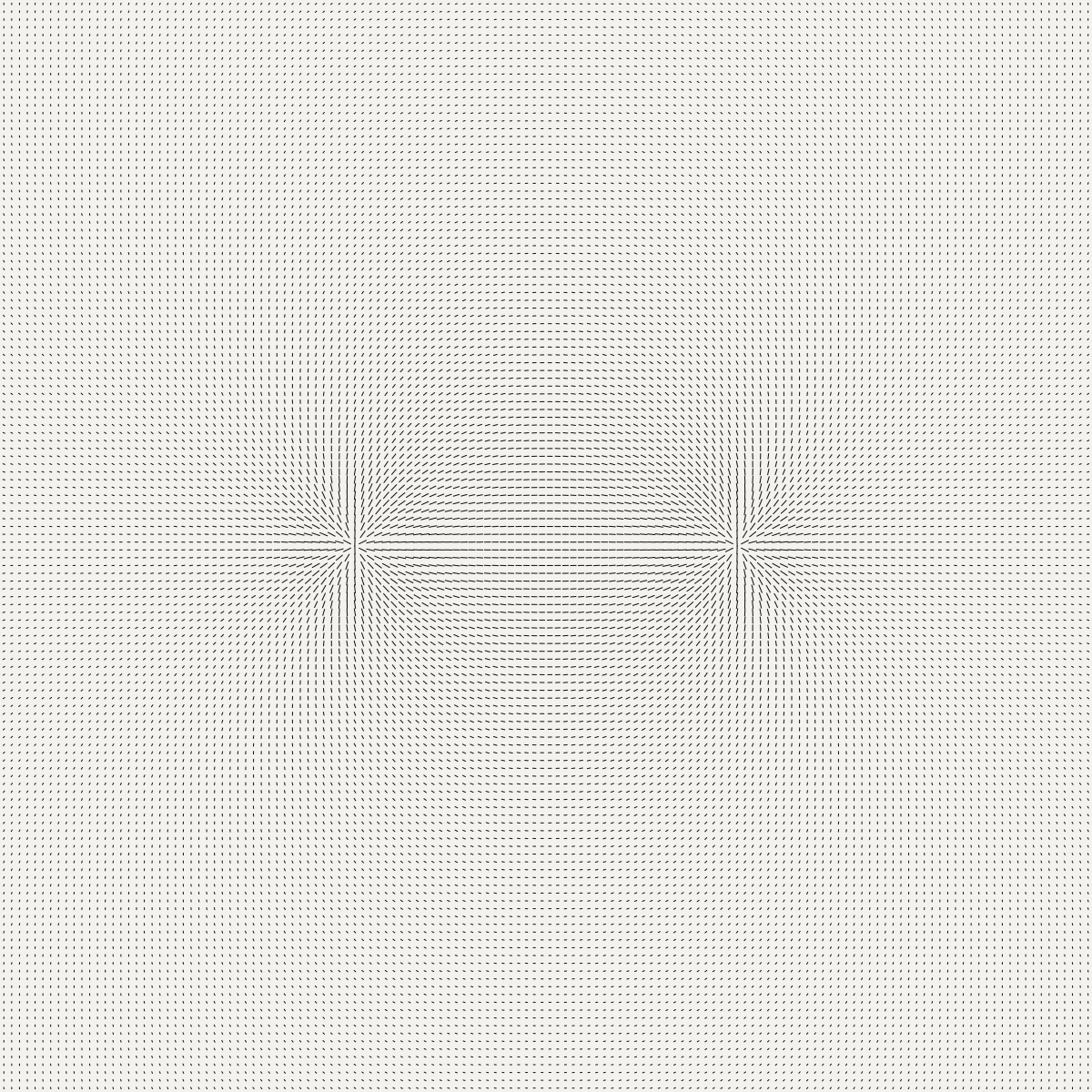
Shown blind to an outside reader — no title, no explanation of what it was being compared to — it read, among other things, as a picture that "announces ‘this is a plot’ before it reads as an image": the sampling grid sitting on top of the field as its own, unwanted pattern.
The second image computes the identical field with the identical rule for angle and length. One thing changes: every mark is nudged sideways from its grid point, by an amount tied to how strong the field is there, moving together along each field line rather than independently. The rule for that nudge was fixed before either image existed and never adjusted afterward to taste.
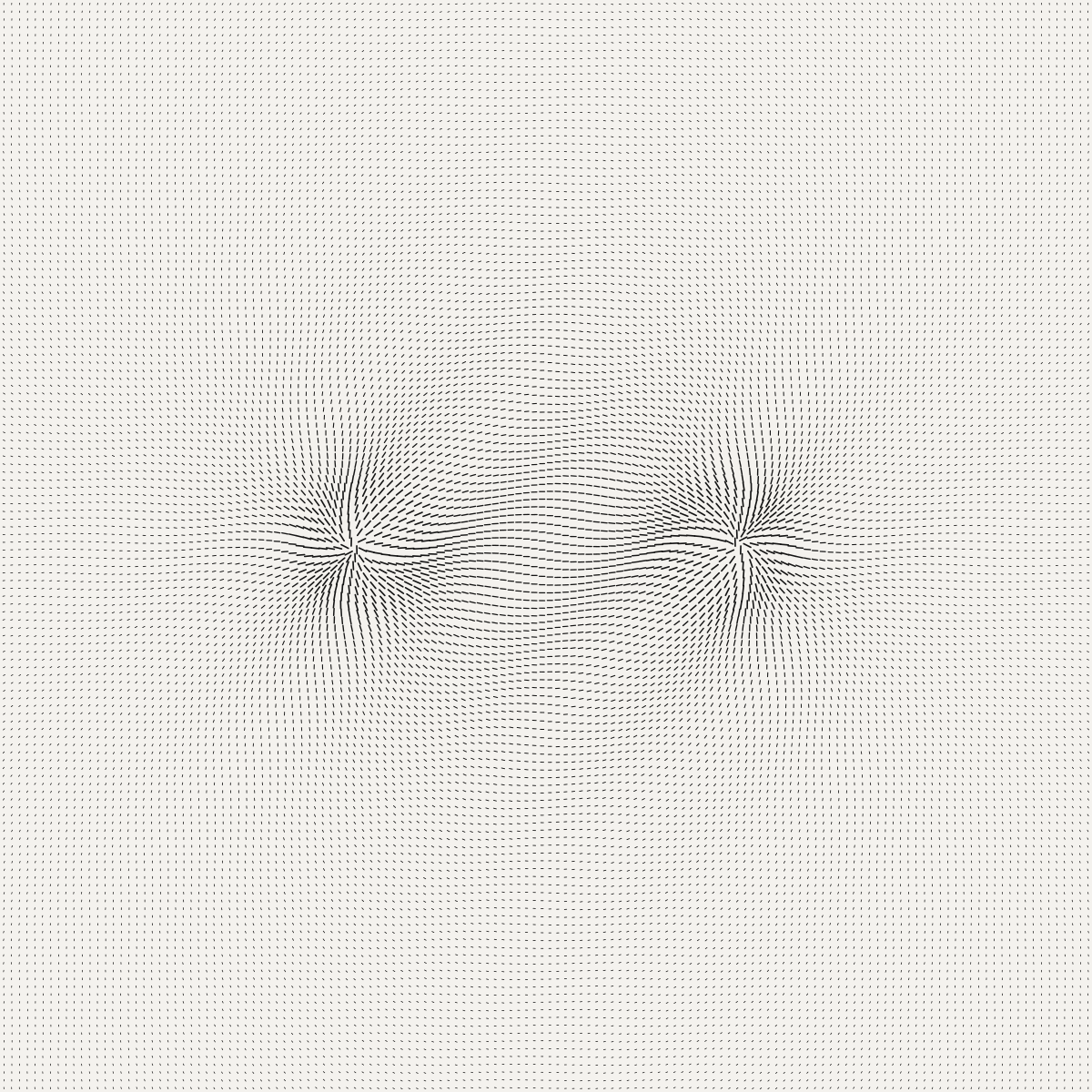
The same reader, still blind, still unlabelled, on this second image:
the grid's ghost disappears and what's left reads as a woven, almost textile or iron-filings texture… that irregularity looks like a decision, not a residue — which is what makes it feel authored
— while the two poles stayed, in the same reply, "perfectly legible." One suggestion from that reply was tried once and kept: the line weight above thickens near each pole and thins toward the calm outer field, rather than staying one flat width throughout.