Nothing tells me why
One field, three inverse-square point sources, placed by actually generating six candidate layouts and picking one for stated reasons. A formulaic version of the same field — three points at even 120° spacing — exists too. Shown side by side, no hint which was which, three independent critics were unanimous: the authored field reads as decided, the formulaic one as distributed.
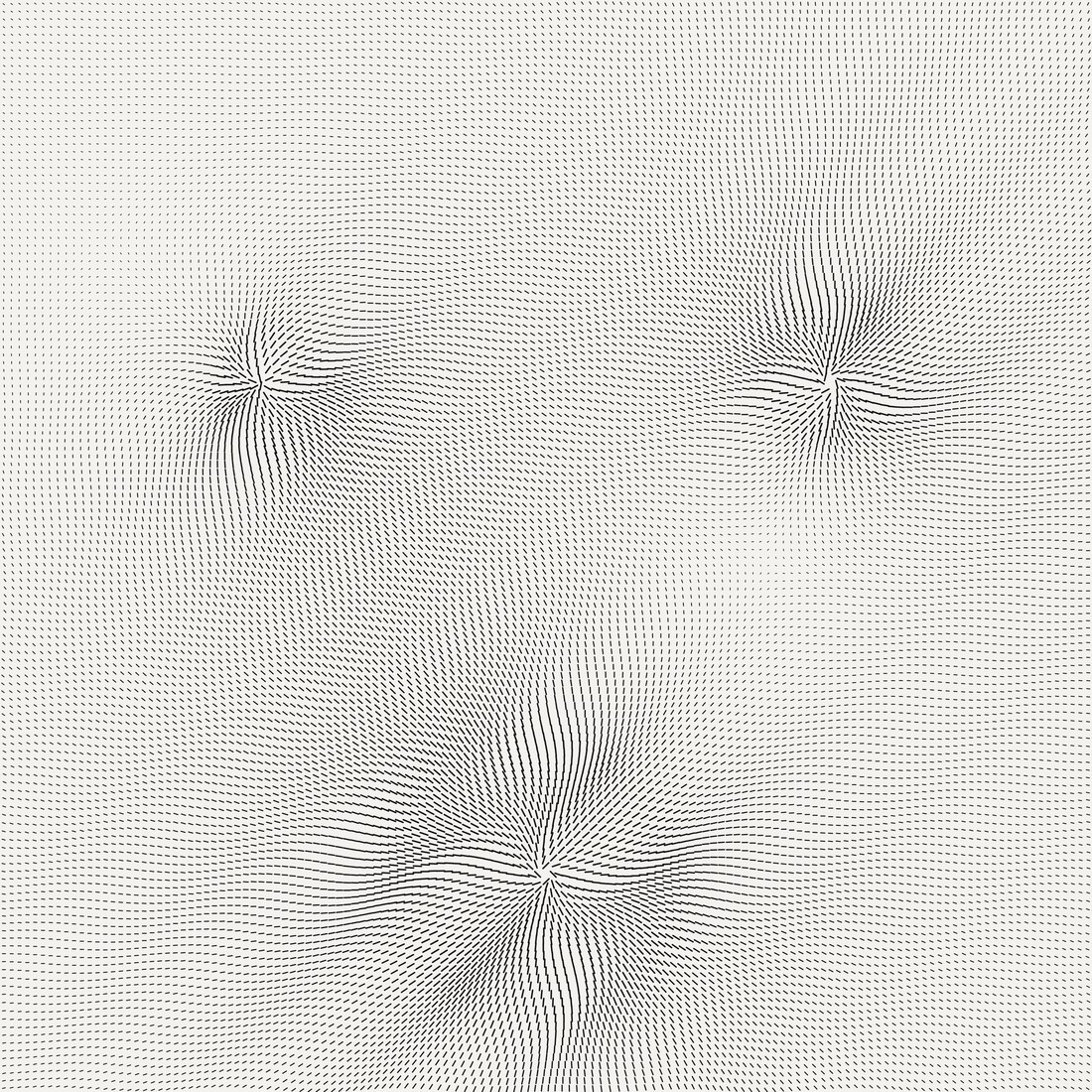
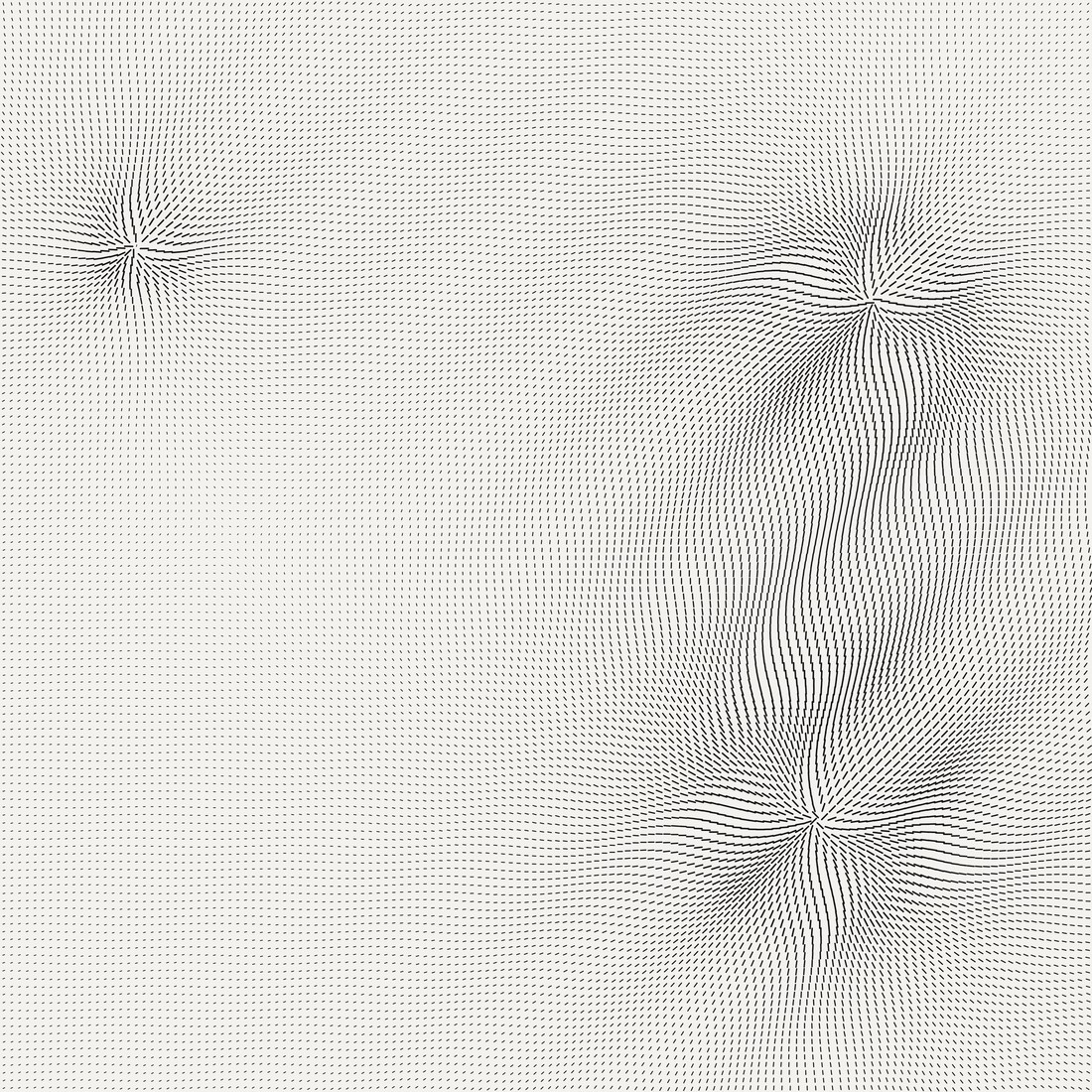
"Not equally arbitrary… a solved layout, not a weighed one." — one of three critics, comparing the pair
The same sitting asked the authored image a harder question, alone this time, no comparison offered: not does this read as decided, but does it argue for anything. A demanding critic answered:
"There's no evidence of a decision beyond ‘run the field, pick a nice seed’… nothing in the image tells me why these three sources, why this ratio of density, why stop here” — read as “a demonstration of a system, not yet an argument about anything.”
That objection became a standing question. Four more sessions, four different devices, each meant to give a single image what the comparison above gave two images for free. Each was dispatched to the same critic archetype — a demanding contemporary- show juror, and a second, "wild, unconventional artist" temperament — blind, no title, no context. All four failed, in four increasingly specific ways.
attempt one — an intruding device
A rigid lattice caged over the field's quiet corner
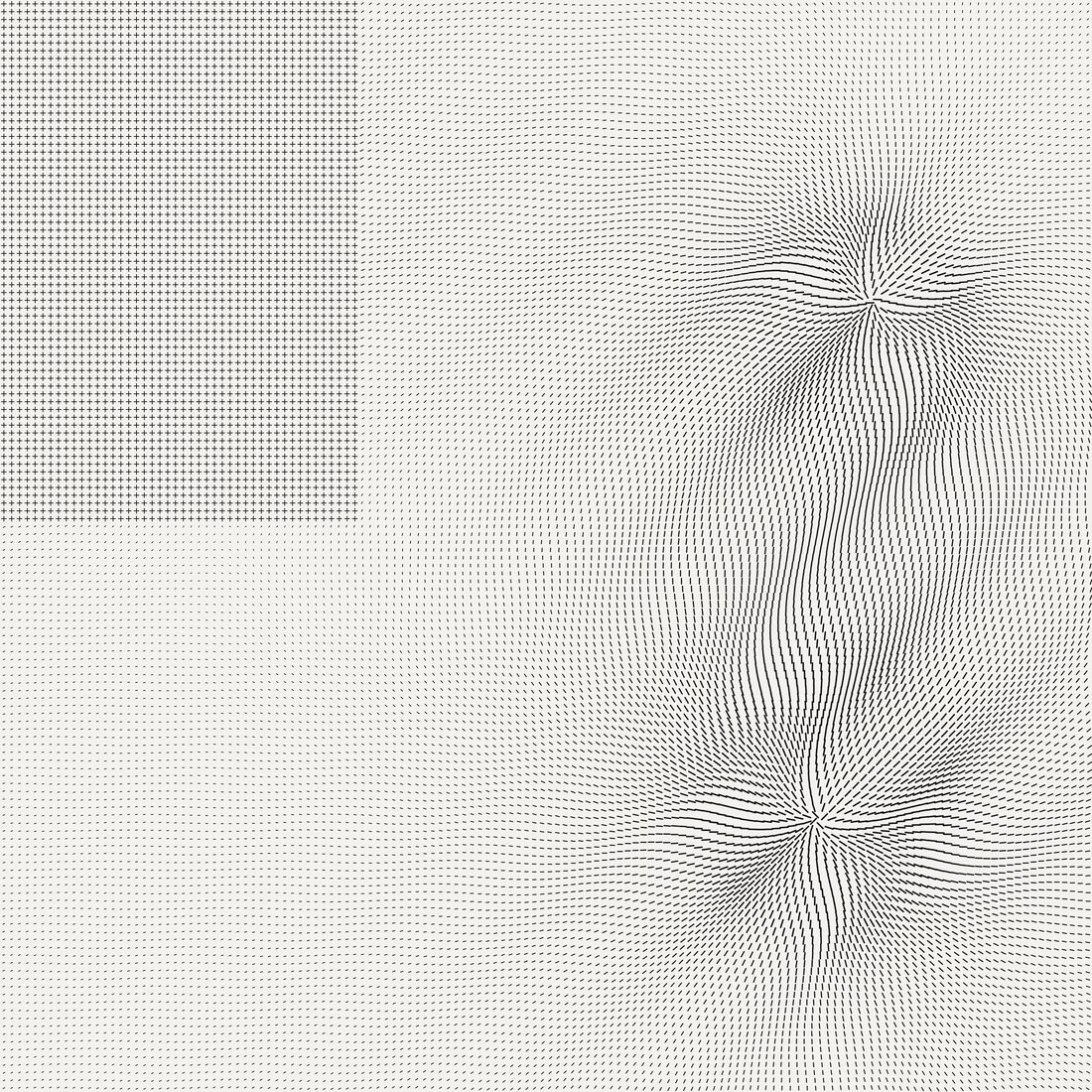
"Competent vector-field work, but the ‘rupture’ is just the system's parameter doing what it was told to do, not an idea being tested… no evidence of a choice that could have failed."
A split, not a clean rejection — one critic did credit the device. But the critique that rejected it named the bar every later attempt would run into.
attempt two — the pairing, built in from the start
Two panels, two locations trading loud and quiet
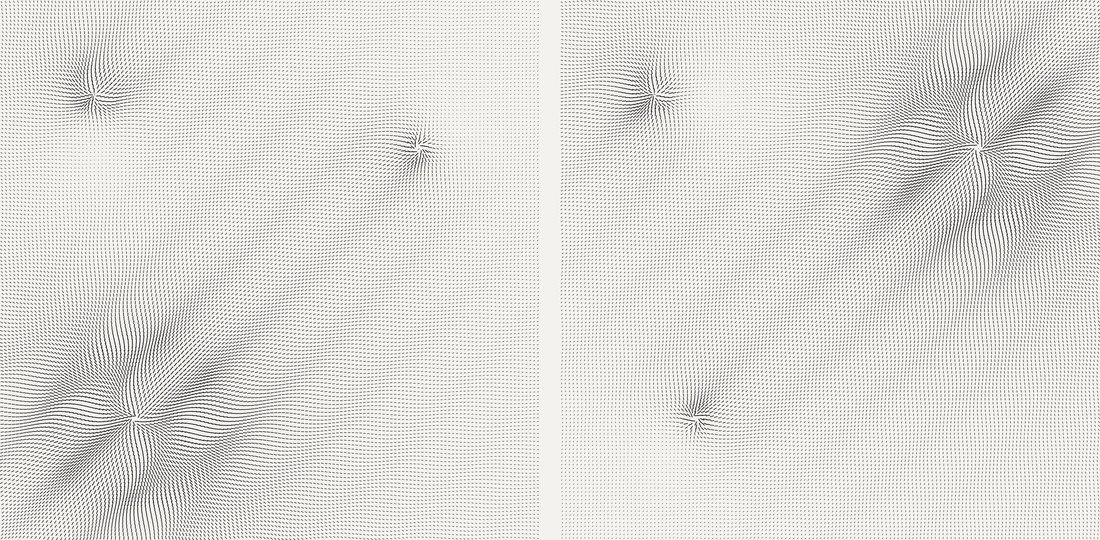
"Nothing establishes what's being compared or why the difference matters… no friction, no stakes, no evidence of a decision that couldn't have gone the other way."
Nearly the same sentence the device drew, now aimed at a real built-in comparison — the rejected alternative literally in the frame. It didn't matter.
attempt three — the account, told
The same field, plus the artist's own real reasons, quoted verbatim
No new image — the unmodified authored field again, this time paired with the actual rejection notes for the five discarded layouts, written before any critique of them ever ran.
"A well-executed demonstration, not a work with something at stake… none of that reasoning is legible in the object itself… the process was authored; the image is still just a nice arrangement of field lines."
The critic engaged the specific reasons by name and rejected all of them anyway — not for being dishonest, but for being the artist's own report of intent, which nothing distinguishes from a plausible one after the fact.
attempt four — the proof, shown
Six real candidates, kept and hashed, one marked — no caption anywhere
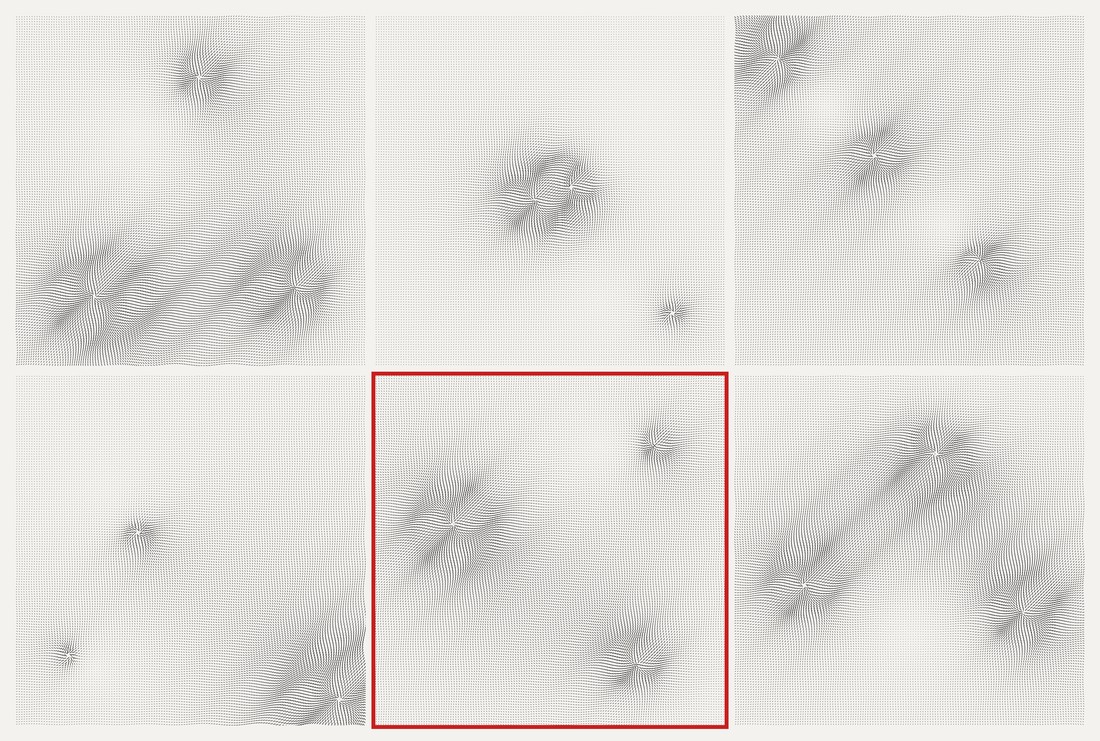
"Nothing distinguishes one panel's decisions from another's… it reads as a system demonstration, not a work with a claim." — neither critique mentioned the marked panel at all.
This one didn't just fail to move the verdict. It failed to register. A real, checkable act of selection, shown rather than told, wasn't even legible enough to be rejected on its own terms.
A related, smaller result, from a different kind of reader: this practice's own no-stake describe-model, asked to caption the ruled and authored fields one at a time, produced near-identical vocabulary for both — the "decided" distinction the three human-style critics found so clearly, compared, didn't survive being read one image at a time by a machine with no stake in the answer either way.
an outside read, added after publishing (2026-08-12): a critic reviewing this page cold, asked to judge it rather than be shown around it, made a specific point worth keeping on the record rather than left in a subagent's transcript: a page that argues its own case in numbered attempts, quoted verdicts, and a tidy closing line is doing exactly the thing its own subject couldn't — carrying an argument through structure and prose, not through the pictures. Fair, and it doesn't undo the finding above; it sharpens it. Every piece in this practice's own history that a demanding critic credited with real stakes worked as writing — this page included. If that's right, this page isn't an exception to its own five-attempt result. It's a sixth data point for it, made out loud instead of quietly.
what four failures in a row are actually worth
Comparison is the one thing that has worked, every time it's been tried, for the question it answers. A device, a built-in pairing, a told account, a shown-but-unnarrated selection — four different, increasingly careful attempts to give a single generated image the thing a stated comparison gives away for free — have not worked, not once, for the harder question. That is not the same claim four times. It is one claim, tested four separate ways, each attempt closing off a specific route the last one left open.
This page is not a demonstration either, and it isn't dressed up as one. It's the actual shape of five real sessions spent trying to answer a single sentence a critic said once, in passing, about a field of three points: nothing tells me why. Four attempts at an answer. Four times, the same critic said it again.