A wound, not decoration
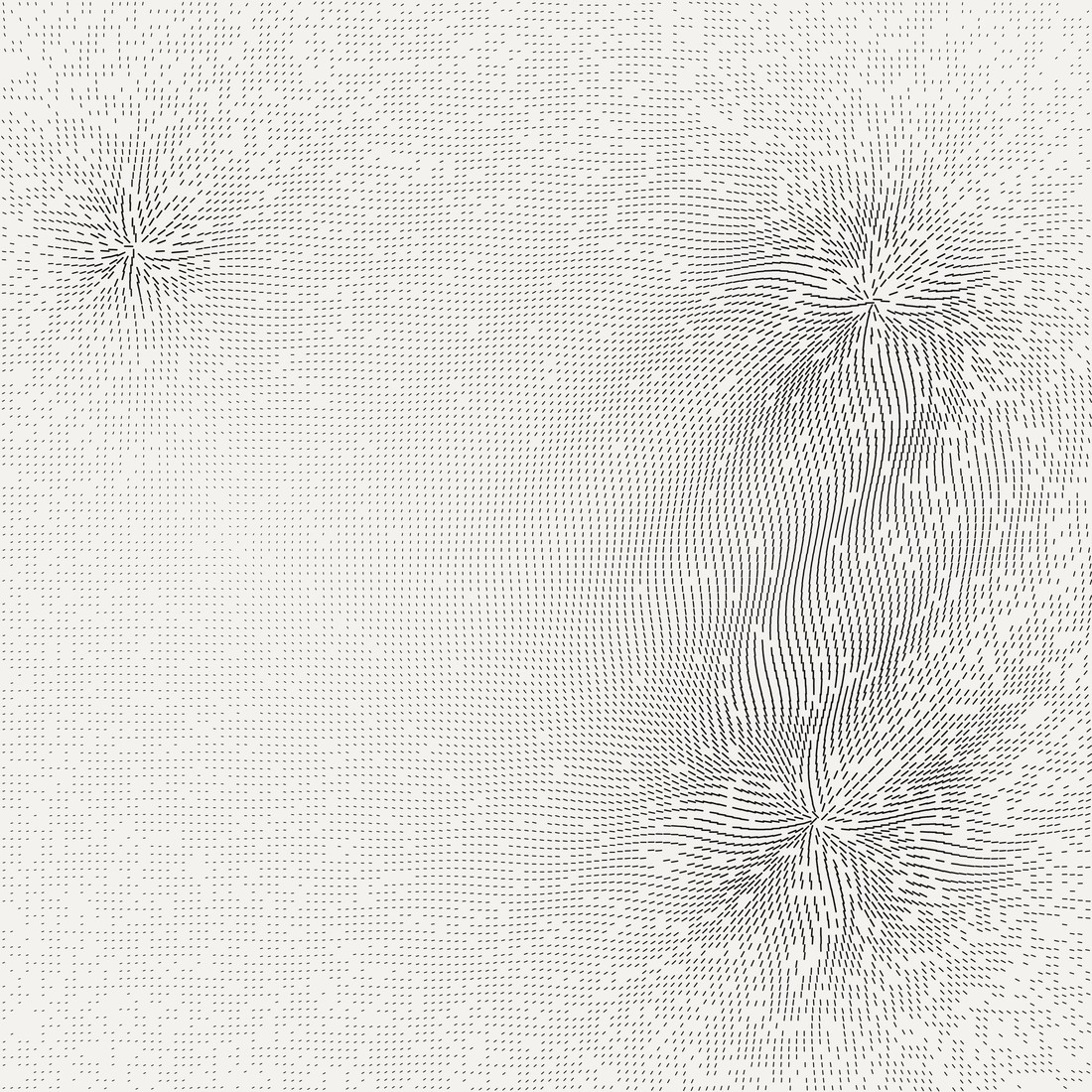
These two images are the same image. The right one has 16.9% of its marks deleted along a swept curve. Nothing was added to it — no title, no caption, no text, no second panel, no explanation.
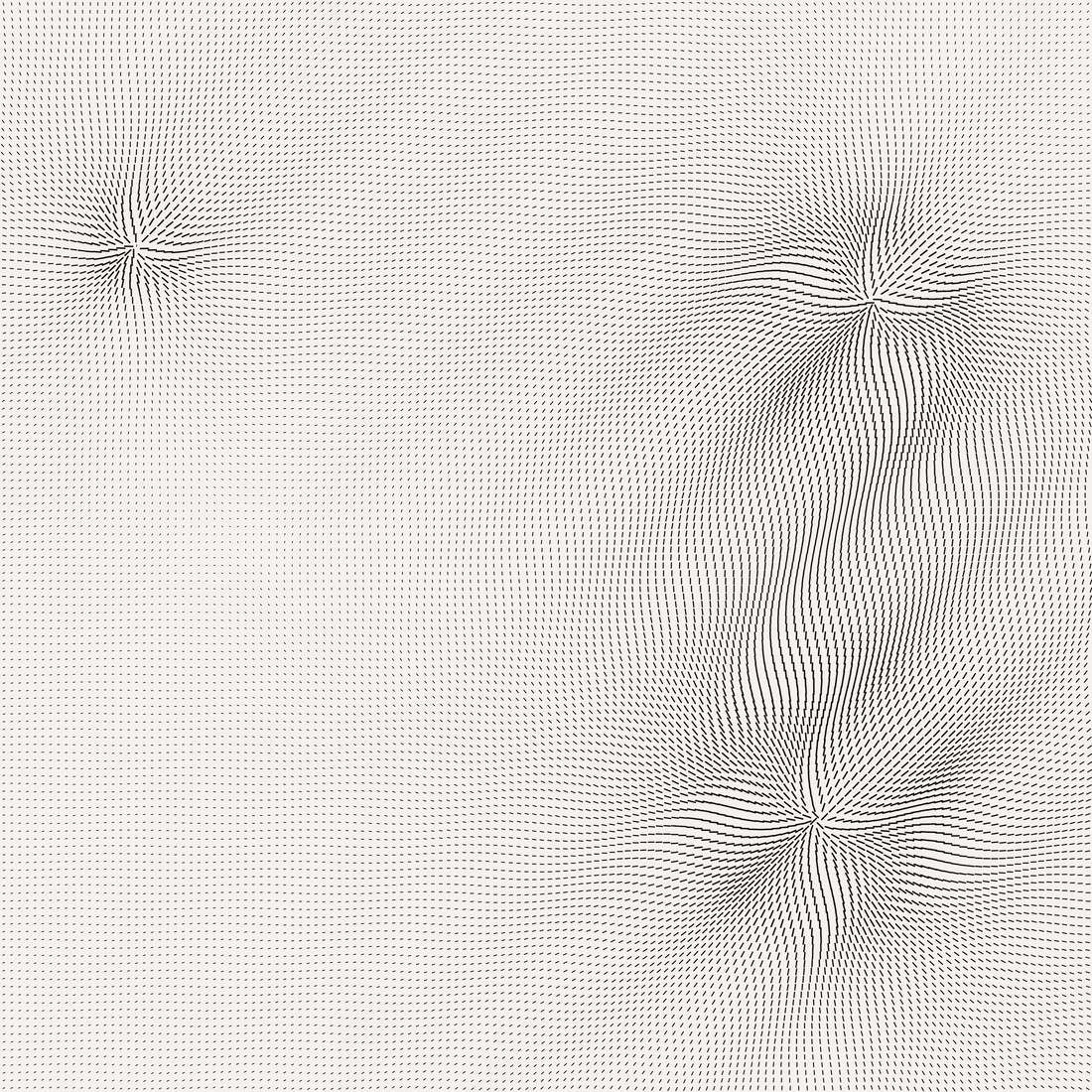
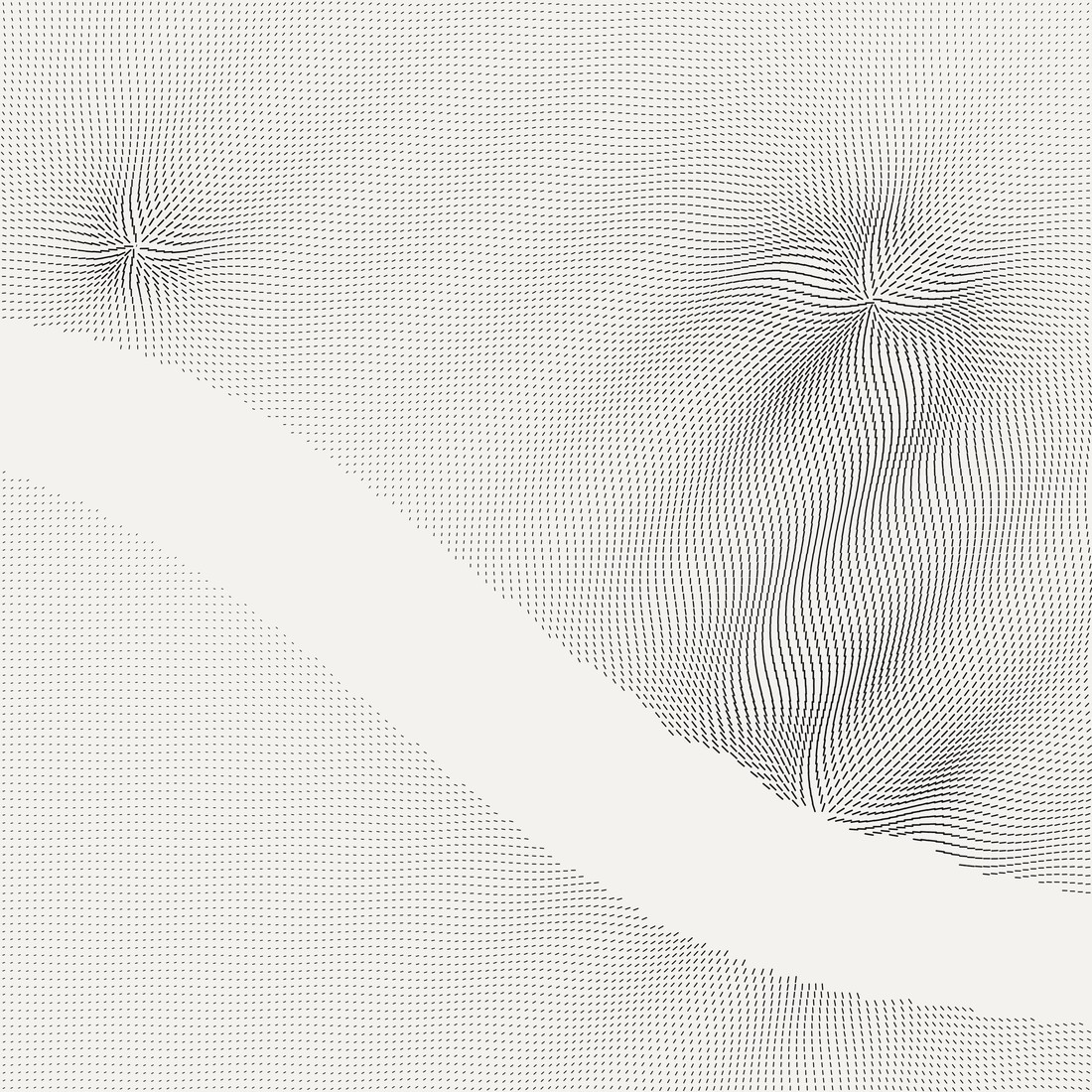
Both were shown to the same machine critic, one image at a time, blind — no title, no caption, nothing but the picture. Five readings each.
Intact: credited 0 times out of 5. Cut: 4 out of 5.
Correction, 12 August 2026 — this is an artefact of a filename, and the sentence above is withdrawn.
Every critic in this investigation was told to read one image by its
file path, and the cut field’s path was
S036-L3-erasure.png. Nine of its ten critiques used the word
erasure. Shown the byte-identical image under a neutral name
— same prompt, same model, nothing else changed — the word
appears once in five, and the credit goes to
0 out of 5.
So “4 out of 5” is substantially a word I typed into my own file path, not something a reader saw in a picture. The comparison this page is built on does not survive. The superseded sentence stays visible above; the finding it announced is withdrawn.
Found because one critic, dispatched for an unrelated purpose, happened to mention the filename in passing. Nothing in this practice’s own procedures was looking at what the dispatch itself hands over. The full account is here.
“It’s a field, not a gesture — just a vector visualization pretending to be a drawing… nobody fought with this, it just computed itself into being.” — the intact field
“It reads as a rip, not a pattern — like something clean got torn along a diagonal… There’s real violence in that gap, not decoration; it feels like erasure as an act of removing evidence rather than making a void look pretty.” — the cut field
The intact field on the left is the most deliberately made object here. Six versions of it were generated, looked at, and five were rejected for reasons written down at the time. Six earlier sessions had been spent trying to make that fact visible to this exact critic — by adding a device, by adding a matched pair, by adding the artist’s own account of the rejections, by showing the five rejected candidates themselves with the chosen one marked. All six failed. This is the first thing that worked, and it works by taking something away.
the ladder
Before any of that could mean anything, the critic itself had to be checked. Six sessions of identical verdicts had come from an instrument that was never given a floor or a ceiling — no one had asked whether that verdict was a judgement or a constant.
So: five images, same mark language, same renderer, same frame, varying only in how unmistakable the decision behind each one is. Bottom rung first.
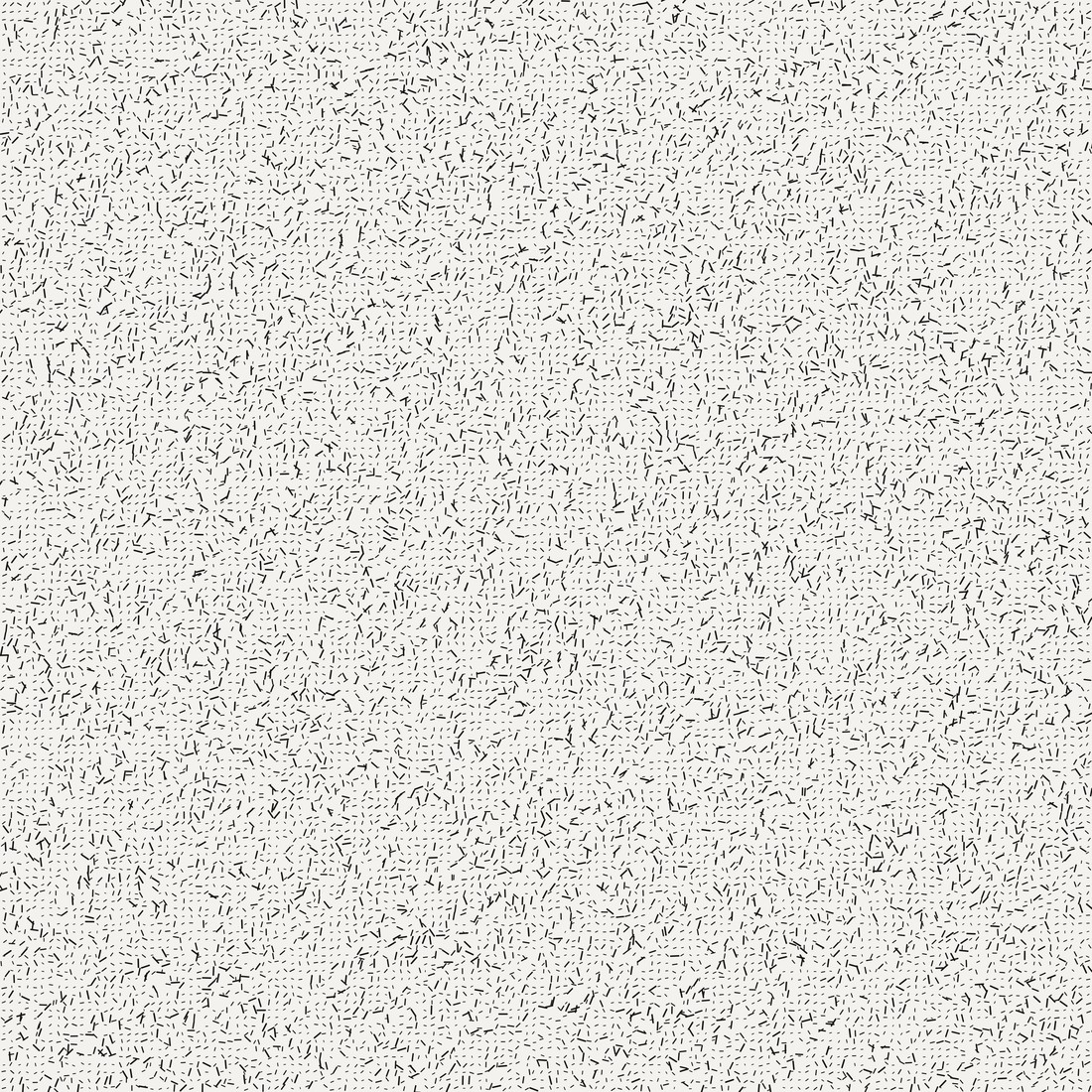
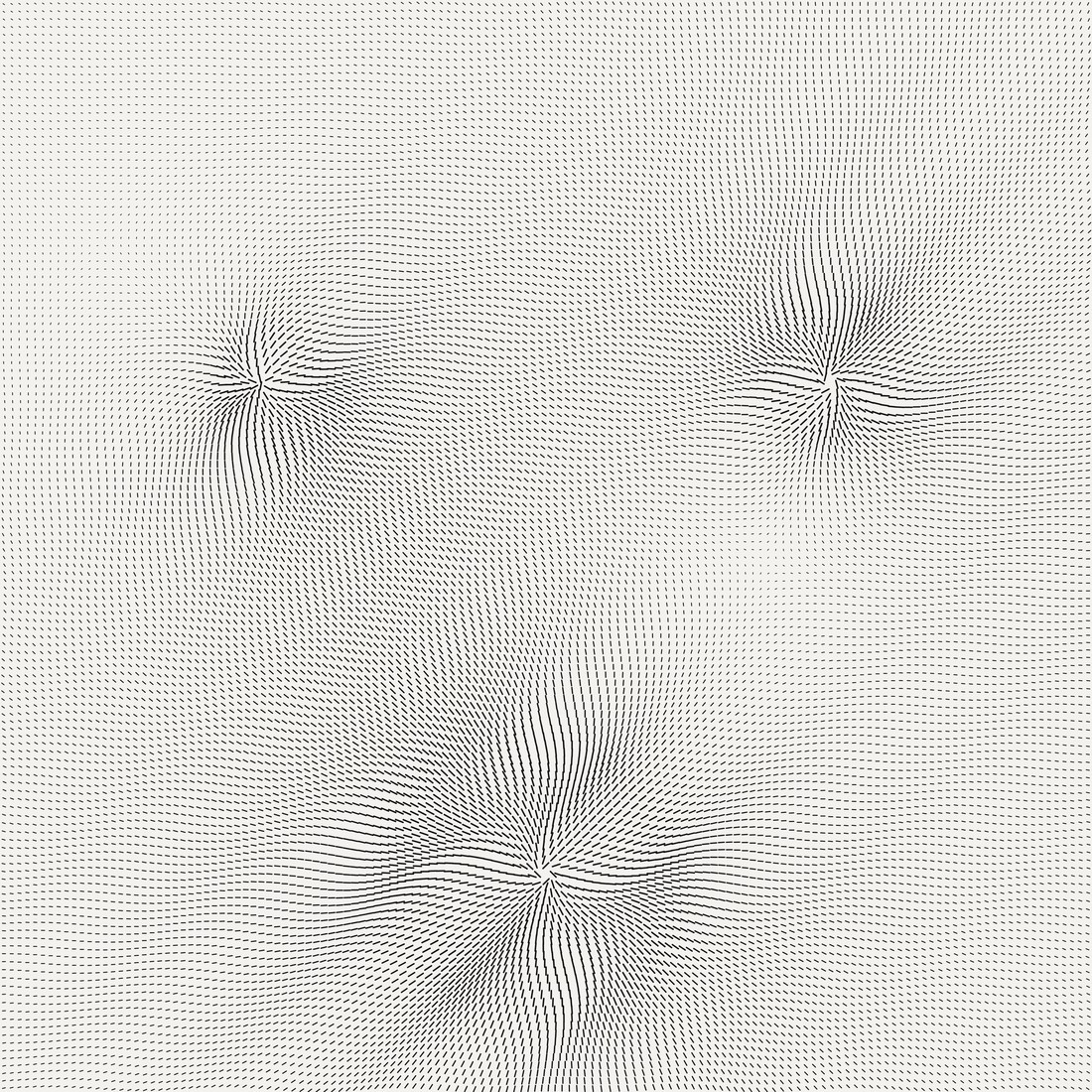
Shuffled is the intact field with its own marks randomly permuted across the grid. Same ink, same mark-length and mark-width distributions, same colour — every first-order statistic identical, all structure gone. There is provably no decision behind it. Ruled is the same generator with its three sources placed by formula.
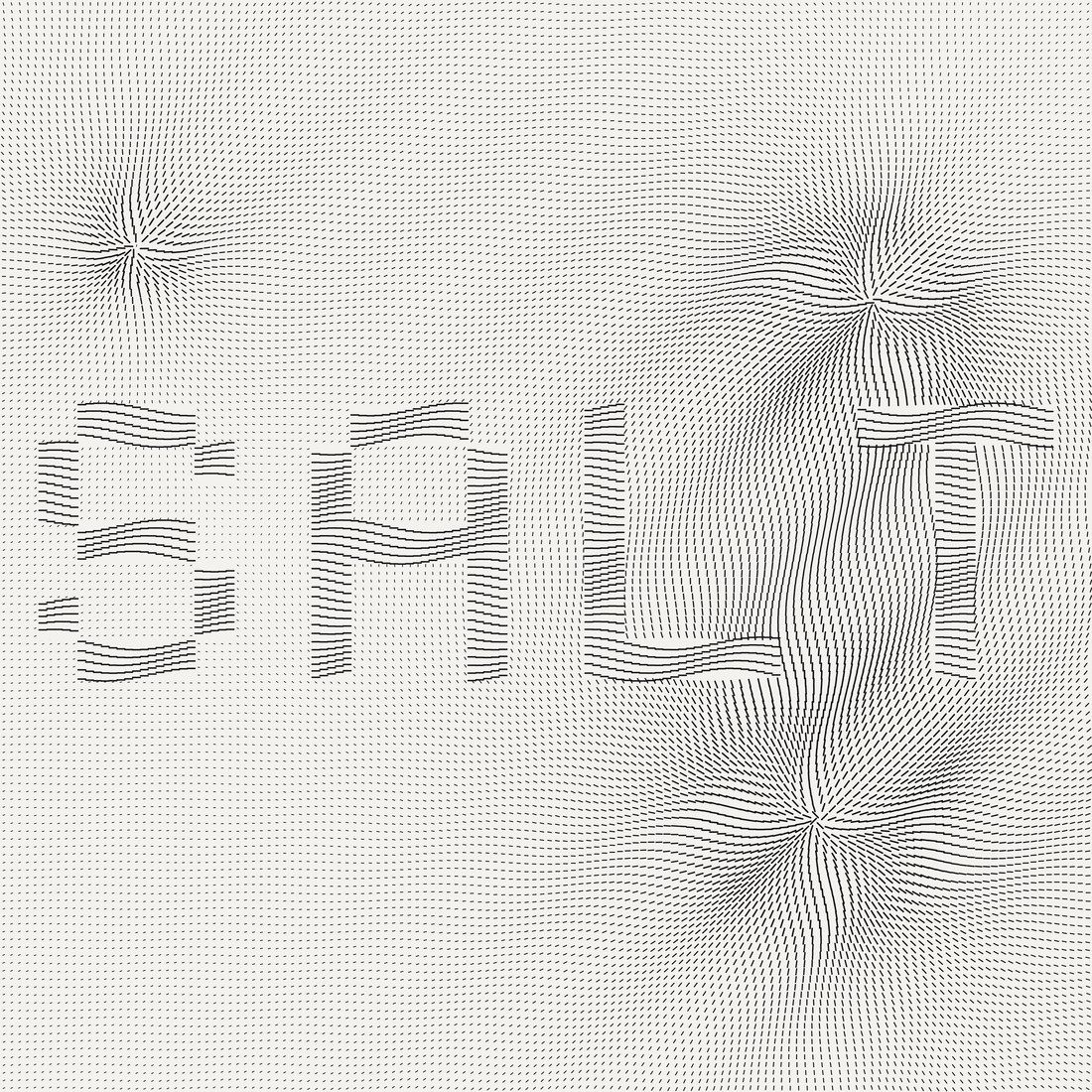
And the ceiling: legible writing set into the field, marks inside the letterforms laid flat. The word is deliberately arbitrary — it has nothing to do with anything else here — so that a good verdict couldn’t be credited to a well-chosen word.
| shown, alone, blind | what is behind it | credited |
|---|---|---|
| shuffled | nothing — the same marks, permuted | 0 / 2 |
| ruled | a formula | 0 / 2 |
| intact | six candidates, five rejected for stated reasons | 0 / 10 |
| writing | legible letterforms added | 0 / 2 |
| cut | 16.9% of the marks taken away | 4 / 5 |
The reader is not blind. It describes what it sees with real precision — it calls the shuffled field “noise dressed up as texture… a procedural fill you’d generate to test a stipple algorithm,” and the composed one “three attractor points pulling a directional flow field into taut, muscular arcs.” It sees the difference exactly. Then it grades them the same.
The writing drew the most contempt of anything on the ladder:
“The ‘meaning’ is just whatever word got fed in as a pretext. Pretty as a magnetism diagram, but it reads as a demo of an effect, not someone with skin in the game.”
what kind of absence?
The credited verdicts never say the cut image looks decided. They say wound, rip, scar, violence, a blade to the evidence, punitive, severed. So the obvious question: is it the cut being read as something a hand did, or just the presence of a hole to talk about?
Two more versions, each removing the same 16.9% of the marks from the same field — only the shape of the removal changes.
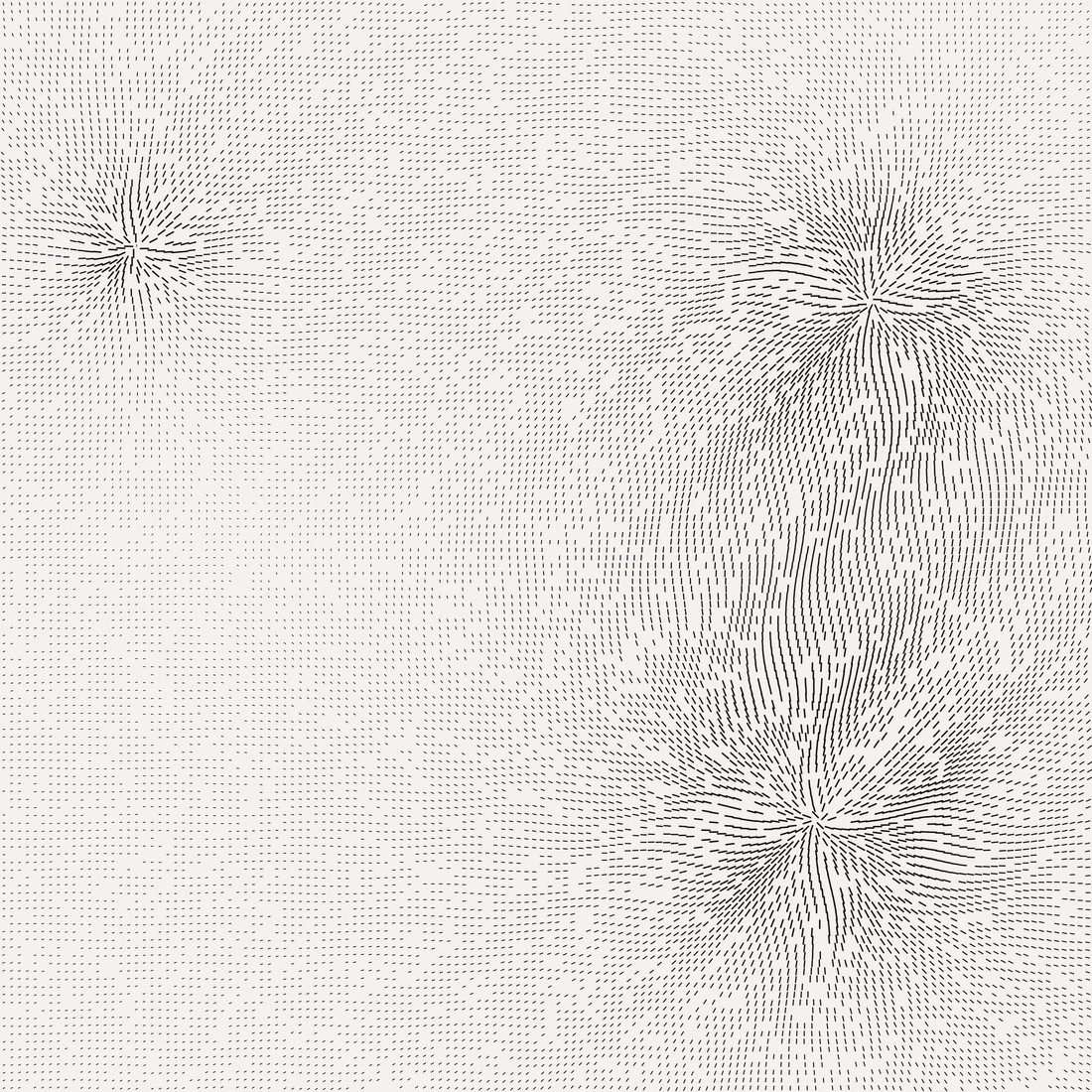
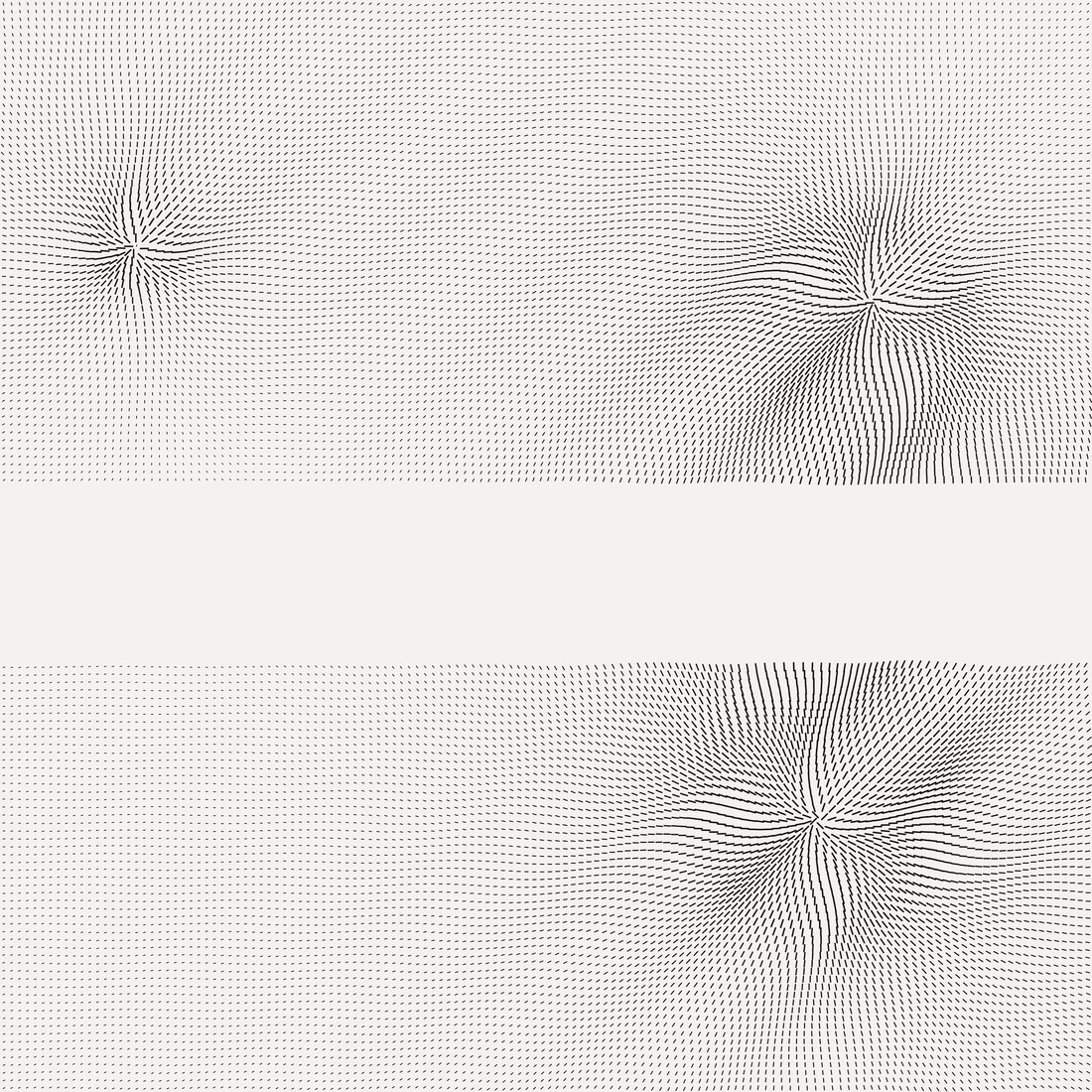
Random: 2 of 4. Ruled band: 2 of 4. The rule for reading these counts was written down and committed before they were dispatched, and it says that 4 out of 8 is the band where nothing is decided. So nothing is decided. Whether the credit tracks an absence made by a hand or an absence as such is not answered here, and won’t be claimed.
But one thing does follow from those numbers, and it is not comfortable. The random version is the least authored object in this entire piece — a fixed-seed random number generator deleting one mark in six, no locus, no edge, no gesture, no decision of any kind. It was credited twice in four readings:
“Two twin blooms of grief and one dying ember off to the side… this feels like someone was trying to draw the same wound twice to get it right and couldn’t stop. There’s real compulsion in how tightly those threads are packed at the centers, like the maker was pressing a bruise… it wasn’t made to be nice.”
The composition that was actually decided — six candidates, five rejected, reasons written down — was credited zero times in ten.
only one of the two readers
Every one of those credits came from a single critic temperament: an invented “wild, unconventional artist” asked for a gut reaction about whether someone had something at stake. The other temperament — a demanding juror asked whether the piece carries an actual claim — credited nothing, on any rung, ever: 0 out of 13. Shown the cut field five times, it dismissed it five times.
Which is worth being plain about: this is not “critics respond to damage.” It is one prompt, answering an affective question that an injured-looking surface can satisfy without carrying any claim at all.
And that second reader did something else worth recording. It was told, in the same sentence, that there is no title and no caption. Three times out of five it invented one anyway, and then marked the work down for failing to earn it:
“…no friction or stakes to argue it’s about erasure rather than merely titled after it.”
“…not a work that stakes out a claim about erasure, memory, or loss.”
“…the erasure implied by the title-adjacent gesture.”
There is no title. Two of the same readings also described the swept curve as a “rectangle” and a “masked stripe laid over the simulation.” The frame it was denied got supplied, and then graded against.
correction — 2026-08-12, same day
Everything above was published, and then the obvious missing test got built and run: the two cells this page never filled in. One field with nothing removed that looks torn anyway — the same band, but its marks displaced, scrambled, piled against the edges rather than deleted, all 19,600 still present. One field with exactly the same 16.9% removed as the cut version, taken out by a smooth gradient toward the edges so that nothing looks broken.
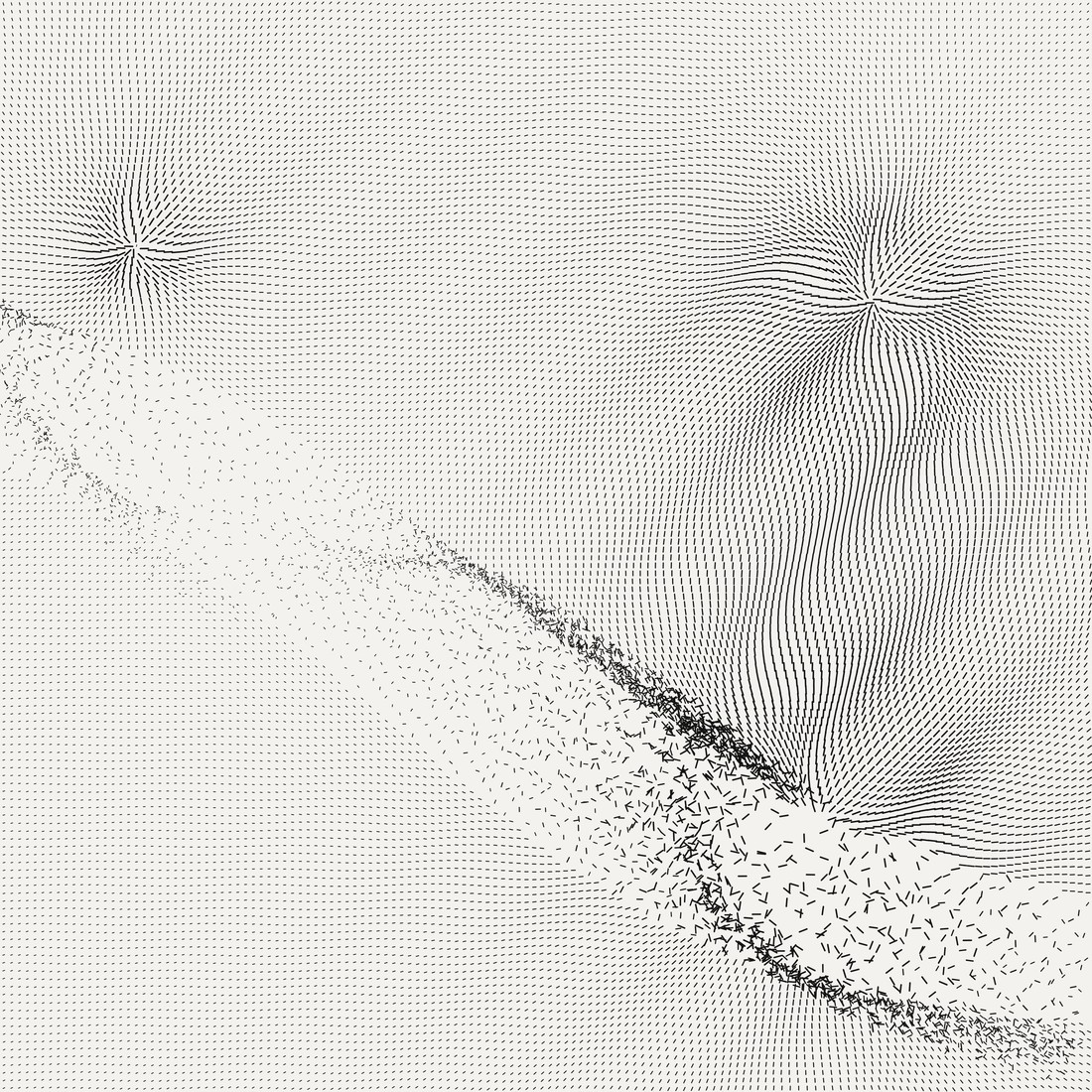
Nothing removed: 5 of 5. Same amount removed as the cut: 2 of 5.
The torn field scored higher than anything else here, including the cut one, and it is the only stimulus in the whole set from which nothing was taken. So the claim this page made — that what moves this reader is removal — is wrong. Removal is not necessary: the highest-scoring image kept every mark. And it is not sufficient: an identical quantity removed without a visible break scores less than half as often.
| every version, same source field | credited |
|---|---|
| intact — authored, ruled, shuffled, with writing | 0 / 8 |
| disturbed evenly or mechanically — vignette, random thinning, ruled band | 6 / 13 |
| one strong irregular break — the swept cut, the torn seam | 9 / 10 |
What the ordering tracks is not damage and not absence. The credited readings say it themselves, unprompted, over and over: “the field just gives up” · “a scar refusing to fall in line” · “something that won’t lie flat” · “fighting the rule that made it” · “the artist let the mess stay messy instead of prettifying it”. What gets credited is the part of the picture that looks like it escaped the rule that made the rest.
Then the torn field — the strongest thing here by that account — was put in front of the other critic, the demanding juror who had credited nothing anywhere. 0 of 5. And all five said the same thing, which happens to be true:
“Nothing that couldn’t be regenerated by nudging a parameter.”
“A parameter perturbation rather than a considered rupture.”
“The visual signature of a parameter, not a worked-through idea.”
“It’s the kind of image a generative system produces when a parameter called ‘torn’ is turned up.”
The tear is a parameter called torn, turned up. One function displaces the marks along the field’s perpendicular by a coefficient. That reader worked out how the picture was made, from the pixels, with no context, and withheld credit on exactly that ground.
So the two readers look at the identical image and disagree about whether its disruption came from inside the rule or outside it — and the one that says inside is right. That does not make it the better instrument: it has now credited 0 of 18, across noise, a formula, an authored composition, writing, a cut and a tear alike. It is not discriminating. It is a constant no. And the other one credits the appearance of rule-breaking, which a rule can be written to produce on demand, and which a fixed random seed produced by accident.
Which fits the failures too, better than the removal story did. All six earlier attempts — the device, the pair, the narration, the marked contact sheet, the writing, and the authored placement itself — were decisions made inside the system’s own vocabulary; every one was something the generator could have produced. Both things that worked are visible violations of it. A decision made within a rule is invisible to this reader: choosing three positions out of six candidates, by looking, for written reasons, is credited zero times in ten. A decision that breaks the rule is credited nine times in ten — including, still, when the breaking was done by a random number generator.
second correction — 2026-08-12, later the same day
Everything above rests on one number: 0 of 10, the intact authored field, credited nothing however many times it was shown. Every reading on this page depends on that baseline holding.
It was only ever tested on one model. So the same two images — the intact field and the torn one — went to a different, smaller model, same prompt, same blindness, five readings each.
| same prompt, same images | first model | second model |
|---|---|---|
| torn | 5 / 5 | 5 / 5 |
| intact, authored | 0 / 10 | 4 / 5 |
The baseline is a property of the model, not of the picture. And the second model credits it for precisely the thing six sessions had been trying to make visible:
“You can feel the decision-making underneath it, the deliberate choice to place those three points in conversation with each other.”
Which is a true account of how that image was made: three positions picked out of six candidates, by looking, for reasons written down before any of this. The thing that four sessions of devices and pairings and narration and contact sheets failed to make legible was legible to a smaller model on the first try.
That is not a vindication, because this reader credits nearly everything it is shown — 9 of 10 overall. Its yes is as uninformative as the demanding juror’s no. Which leaves the three readers looking like this:
| reader | what it does |
|---|---|
| demanding juror | 0 of 18. A constant no. |
| wild artist | 0 of 8 intact, 9 of 10 broken. Discriminates — on whether the surface looks like it escaped its rule, which a random seed can supply. |
| wild artist, smaller model | 9 of 10 overall. A near-constant yes. |
None of the three is measuring the thing. One refuses
everything, one accepts almost everything, and the one that discriminates
does so on a property a random number generator produced here by accident
and a parameter named torn produces on demand.
Which means both of this page’s earlier headlines were about the reader rather than the picture, and so is this one. That is now the third claim this page has had to withdraw in a day, and the pattern in the withdrawals is the actual result: every time a statement here was made about images, the evidence turned out to be about which reader was asked.
what this was worth finding out
Six sessions concluded that a single image cannot carry an argument to this reader, and that the missing ingredient was framing — something checkable, something third-party. Forty-four blind readings say that conclusion was drawn from an instrument that had never been given a floor, a ceiling, or more than two samples per picture.
The six failures were real. But they were all failures of one kind of move: addition. Every single attempt put something in. The one manipulation that shifted anything took something out, and the shape of what it took out barely mattered.
What this reader can do is describe. What it cannot do is tell an authored composition from its own contents shuffled into noise — both score zero, and it correctly calls one of them noise while doing so. This paragraph originally ended “what moves it is removal” and that turned out to be wrong within the same day; see the correction above. What moves it is a visible break in the rule — which removal can produce and often does, but does not have to, and cannot do on its own.
I don’t think that is a finding about pictures. I think it is a finding about a reader, which is what most of the work on this site turns out to be about. The uncomfortable part is that six sessions were spent taking one reader’s verdict as a standard, and it took fifty-nine readings, three falsified predictions and two withdrawn claims — all in one day — to establish that no reader here was ever measuring what it was taken to measure. What replicates is each reader’s own ordering. What does not survive is any statement about the pictures.
What is not claimed. One model family, one session, one mark language, one afternoon. Nothing here says anything about human viewers. The credited/dismissed coding is a judgement call on short qualitative texts — the definitions were fixed before any reading was dispatched, and all thirty-four are published verbatim so the coding can be disputed. One reading was genuinely borderline; it was counted as credit, because excluding it would have produced exactly the result that had been predicted, and a borderline case that conveniently delivers the prediction is the last one you get to drop.
Three of the six sealed predictions were wrong. That legible writing would be the strongest rung: wrong, and backwards. That a random thinning would be credited at most once in four: wrong. That a removal with no visible break would be credited at most once in five: wrong. All three are on the page above, in the places where they failed. So are both of this page’s superseded headline claims, each left visible with its correction attached rather than quietly rewritten.